Reducing Idle Time: How Construction Telematics Slash Fuel Costs
As a Heavy Highway Operations Analyst and Telematics Expert, I review profit and loss statements for major construction firms every single week. In 2026, profit margins in civil construction and earthmoving are razor-thin. Contractors are constantly looking for ways to bid leaner, operate faster, and maximize equipment utilization. Yet, I routinely walk onto massive highway job sites and watch thousands of dollars literally evaporate into thin air out of the exhaust pipes of stationary equipment.
Many site superintendents treat idling as the standard cost of doing business. They assume it is just a minor inefficiency. The reality is that unmanaged idle time is a financial hemorrhage. Industry data shows that heavy construction equipment—from massive excavators to articulated dump trucks—often idles for an astonishing 40% to 50% of its total operating hours.
If your company is not utilizing advanced heavy equipment idle time tracking, you are bleeding capital. Here is the true financial breakdown of what idle time actually costs your fleet, and how modern GPS telematics software is actively slashing fuel waste to transform your bottom line.
The True Cost: Much More Than Just Wasted Diesel
When analyzing the financial impact of idling, most contractors stop at the fuel pump. That is a massive analytical mistake. The cost of fuel is only the tip of the iceberg in construction fleet fuel management.
-
Fuel Consumption: A standard diesel excavator, bulldozer, or dump truck burns approximately 0.5 to 1 gallon of diesel fuel per hour while sitting entirely stationary. If you have a fleet of 20 machines idling for just two unnecessary hours a day, at standard 2026 diesel prices, you are burning tens of thousands of dollars annually on zero productivity.
-
Unnecessary Engine Wear and DPF Clogging: Diesel engines are engineered to work hard under heavy loads, not to sit at a low RPM. Prolonged idling prevents the engine from reaching optimal operating temperatures, which leads to incomplete combustion. This rapidly clogs the Diesel Particulate Filter (DPF) with soot. Forced DPF regenerations and premature filter replacements can cost thousands of dollars per machine, alongside the devastating cost of unplanned downtime.
-
Accelerated Warranty Expiration: Unlike passenger vehicles, heavy equipment warranties and preventative maintenance schedules are strictly dictated by engine hours, not mileage. If a machine carries a 5,000-hour powertrain warranty and it spends 40% of its life idling, you are burning through 2,000 hours of premium warranty coverage while the machine sits parked.
-
Asset Depreciation: When it comes time to liquidate or trade in your yellow iron, the secondary market prices assets based on engine hours. By allowing high idle times, you artificially inflate the hour meter. You are degrading the resale value of a $300,000 asset faster than necessary, simply because an operator left the cab running during a 45-minute lunch break.
How Construction Telematics Slash Fuel Costs
To effectively reduce fuel costs dump trucks and excavators generate, you cannot rely on site supervisors yelling at operators to turn off their keys. You need objective, hard data. This is where modern GPS and telematics platforms completely change the game.
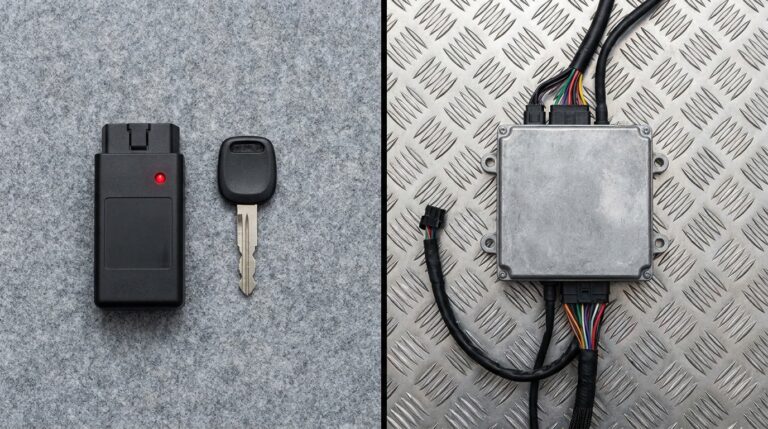
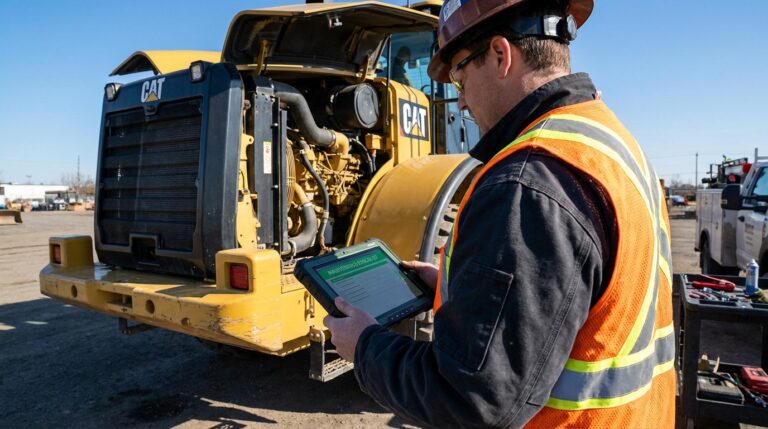
Telematics hardware plugs directly into the machine’s CAN bus (Controller Area Network), pulling real-time diagnostics directly from the engine control module. The software takes this raw data and translates it into actionable financial intelligence.

Here is exactly how fleet managers use telematics to mitigate fuel waste:
1. Customized Idle Reports and Alerts
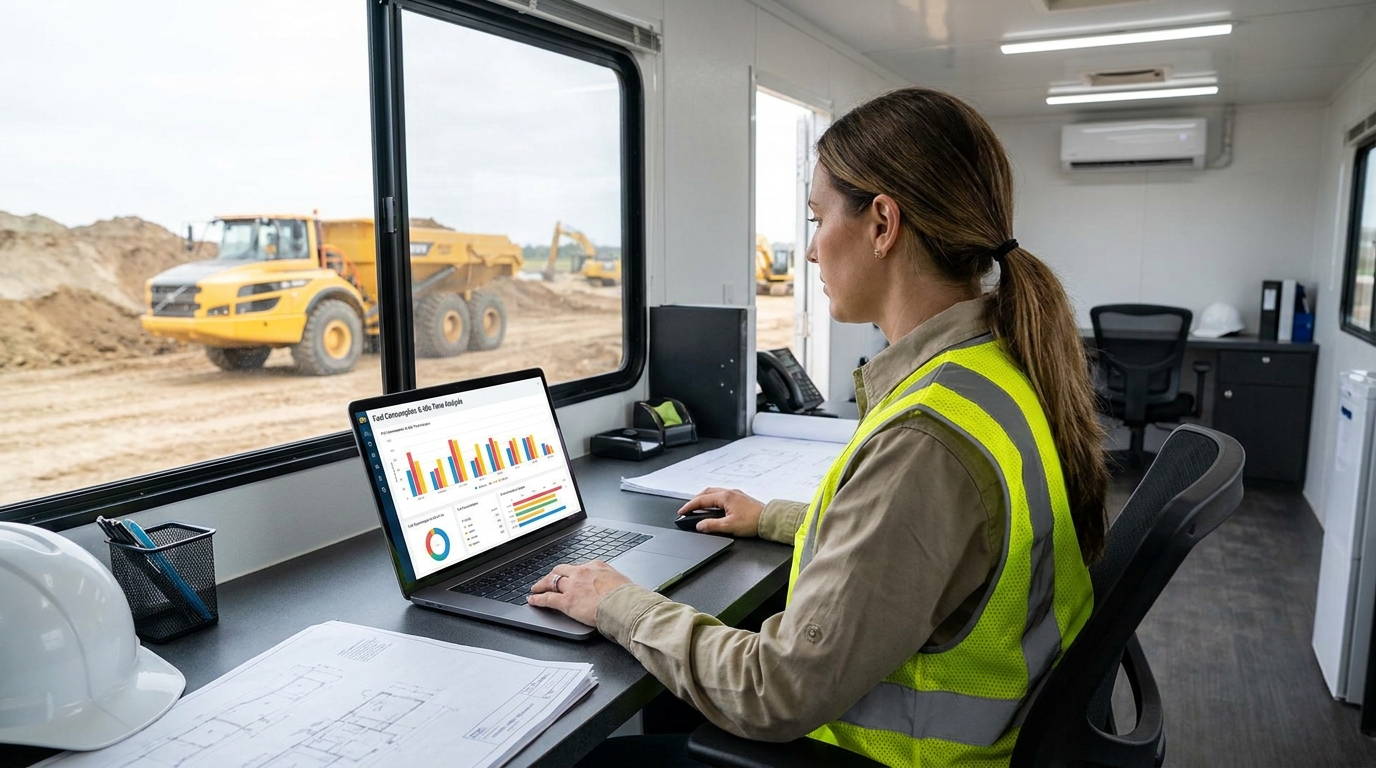
Modern off road equipment tracking systems allow you to set strict operational parameters. Instead of guessing who is leaving their machines running, the software generates automated “Idle Reports.” You can configure the system to trigger an instant SMS or email alert to the site foreman if a specific machine idles for more than five consecutive minutes. This allows supervisors to address the waste in real-time before the hour meter runs up.
2. Operator Behavior Modification
Telematics data removes emotion and guesswork from performance reviews. If your fleet average for idle time is 45%, but the data shows three specific operators are hovering around 60%, you can implement targeted coaching. When operators know their engine states are being actively monitored, the behavioral shift is almost instantaneous. Many top-tier fleets implement bonus structures, financially rewarding the operators who maintain the lowest idle ratios for the month.
3. Identifying Job Site Logistics Bottlenecks
High idle times are not always the fault of a lazy operator; they frequently point to logistical failures. If your telematics dashboard shows that five dump trucks are consistently idling for 20 minutes at a time near the loading zone, you have identified a severe bottleneck. It tells the operations analyst that the excavator is undersized for the loading task, or that you simply have too many trucks assigned to that specific route. By analyzing the data, you can reallocate assets and instantly eliminate the waiting time.
4. Environmental Compliance and Bidding Advantages
In 2026, reducing idle time is not just about internal cost savings; it is becoming a mandatory prerequisite for winning heavy highway contracts. State Departments of Transportation (DOT) and municipal governments are increasingly enforcing strict emissions caps on public works projects. Telematics software tracks overall emissions reductions alongside fuel savings. By utilizing this data, construction firms can prove their adherence to environmental standards, allowing them to qualify for lucrative, green-initiative public bids.
The Ultimate Telematics ROI in Construction
The telematics ROI construction firms realize when implementing these systems is staggering. Moving a fleet from a 45% idle rate down to a managed 15% idle rate yields a massive financial windfall.
You are instantly lowering your monthly fuel expenditures, extending the interval between preventative maintenance services, preserving the remaining life on your OEM warranties, and drastically increasing the residual resale value of your fleet.
In the modern era of heavy highway construction, data is just as important as diesel. You cannot manage what you do not measure. Stop burning your profits through the exhaust pipe. Invest in a robust telematics platform, track your engine hours relentlessly, and build a leaner, more profitable operational footprint.
Operational & Financial Disclaimer: The information provided in this article is for educational and informational purposes only. It does not constitute formal financial or operational advice. Fleet management and telematics ROI can vary based on equipment type, local fuel prices, and operational conditions. Always consult with a certified fleet manager or telematics vendor to accurately model the potential cost savings for your specific enterprise.